


The Specialists Patients Need: How the Schilsky Fellowship Is Expanding Access to Parkinson's Care
Parkinson’s disease is one of the fastest-growing neurological disorders, affecting more than 1 million Americans. Yet every year, fewer than 100 neurologists complete the fellowship training required to become movement disorders specialists.
As a result, many people with Parkinson’s wait months for an appointment or cannot access specialty care at all. Because Parkinson’s disease progresses differently in every patient and treatment plans often require frequent adjustments, timely access to a movement disorders specialist can have a profound impact on quality of life. With no way yet to slow or stop the disease, the field urgently needs both highly trained clinicians and innovative researchers.
Duke Health is helping address this challenge by providing promising young neurologists with the time, mentorship, and resources they need to become leaders in Parkinson’s disease care and research.
The Dr. Randy M. Schilsky Movement Disorders Fellowship — established in 2023 with support from Dr. Randy Schilsky and the RMS Family Foundation — provides fellows with a second year of training that includes protected time for research and innovation while they continue caring for patients.
Building the next generation of leaders
Kathryn Moore, MD, assistant professor of neurology and director of the Parkinson’s Disease and Movement Disorders Fellowship Program at Duke, sees training more specialists and giving them room to grow as her top priority.
“For many fellows, their second year is the first opportunity they have to step back from the nonstop pace of clinical training to think more intentionally about the kind of physician they want to become,” Moore said.
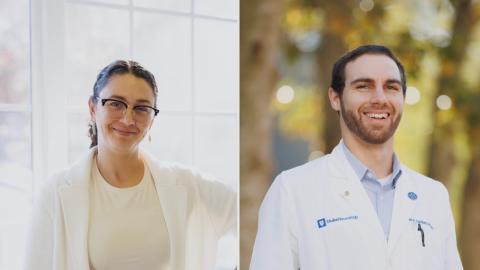
Former fellow Talita d’Aguiar Rosa, MD, HS’23-’25, experienced that benefit firsthand. Now an assistant professor of neurology at Duke, she used her second year to develop research questions and innovative approaches to improving patient care.
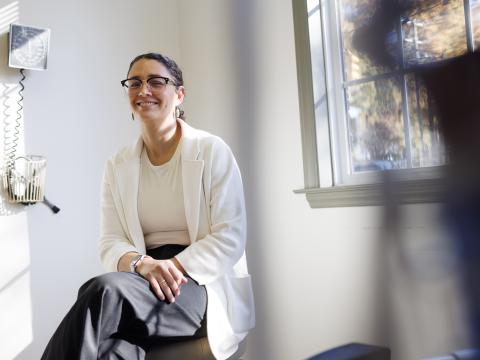
Working with mentors in Duke’s Movement Disorders Division and collaborators in biomedical engineering, Rosa explored advanced imaging techniques that could make deep brain stimulation (DBS) more personalized and precise. Today, optimizing DBS treatment typically requires multiple appointments over many months. Her research aims to identify imaging-based targets that can help physicians tailor treatment more precisely and efficiently, reducing the number of appointments needed to fine-tune a patient’s care.
“The type of support, the amount of support, and the opportunities I’m having as a faculty member right now are very much directly related to what I was able to do in my second year,” Rosa said.
The fellowship also gave Rosa the opportunity to explore broader questions about access to care. During her training, she helped develop a clinic for people newly diagnosed with Parkinson’s disease that connects them to care earlier.
Bringing research to patients
Another fellowship graduate, Brian Dahlben, MD, HS’22-’24, assistant professor of neurology at Duke, focused on a different challenge: bringing emerging therapies to patients.
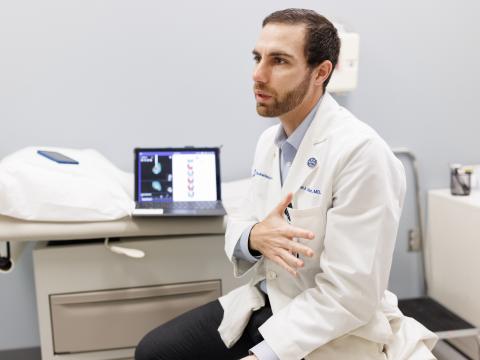
Interested in neuromodulation and emerging technologies, Dahlben used his second year to study cervical dystonia, helping develop a sensor-based system that could provide more objective measurements of disease severity and treatment response.
Today, his work spans patient care, clinical research, and education. Alongside caring for patients and leading clinical trials, he helps train non-specialist providers and educate patients and families, viewing education as another way to expand access to high-quality movement disorders care. Keeping pace with advances in movement disorders medicine is central to all three.
“If I were to blink, I would miss the next advance,” he said of the rapid pace of innovation in movement disorders medicine.
“It’s a way of extending care, not just accepting what’s available, and making sure patients have access to cutting-edge opportunities and emerging treatments,” Dahlben said.
Mentorship that multiplies impact
While pursuing research across disciplines during their second year, fellows collaborate with experts across Duke. Those relationships provide more than scientific and clinical guidance; they help fellows develop the confidence, skills, and perspective needed to lead throughout their careers.
“The support I had from my mentors was the most important thing,” Rosa said. “It gave me a roadmap for research and a roadmap for how to be a good mentor and pass it on.”
That multiplier effect extends far beyond Duke as graduates carry forward the expertise, mentorship, and research experience they’ve gained.
Unlike many accredited training programs that receive dedicated funding, movement disorders fellowships must rely on philanthropy or other sources to fund fellowship positions. Consistent support from the RMS Family Foundation has helped Duke sustain and grow the fellowship, and that success has attracted additional support from other foundations, including the Michael J. Fox Foundation and the Edmond J. Safra Foundation.

Behind Schilsky’s support is a deeply personal motivation. Before receiving a diagnosis of early-onset Parkinson’s disease in 2019, he spent nearly two decades searching for answers while navigating chronic pain, countless appointments, tests, and treatments that failed to address the root cause of his symptoms.
For Schilsky, the goal is simple: to improve access. By supporting fellowship training, he hopes to expand access to high-quality care in North Carolina and across the country.
“Too many people never have the opportunity to see a movement disorders specialist,” Schilsky said. “They may not receive the right diagnosis until much later in their disease, and that can have a profound impact on their quality of life. We need more specialists so patients can get the right care sooner.”
For patients and families facing a disease that still has no cure, investing in the next generation of movement disorders specialists may be one of the most powerful ways to accelerate progress.
About Duke Health
One of the world’s leading academic medical centers, Duke Health strives to transform medicine and health locally and globally. We do so by elevating standards of care; conducting breakthrough research and discovery; teaching and training the next generation of providers; and strengthening global and community health. Every donor joins Duke Health to advance health together. Learn more about why Duke Health is MADE FOR THIS.