


Why We're MADE FOR THIS
Learn what we're doing to transform health care, prepare the next generation of leaders, and solve the world's greatest medical challenges.
Stories

Duke Parents Pitch In to Support COVID-19 Research
Steve and Lisa Eisenstein, P’19, P’22, are no strangers to supporting good causes—and not just by opening their wallets. They are active in various philanthropic organizations, including one that helps people rebuild homes after hurricanes and other natural disasters.
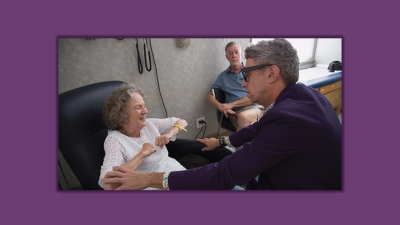
Taking a Giant Leap
When facing an illness such as ALS, one in which there currently is no proven treatment to stop or reverse it, patients often look to clinical trials for options for living longer and better lives.

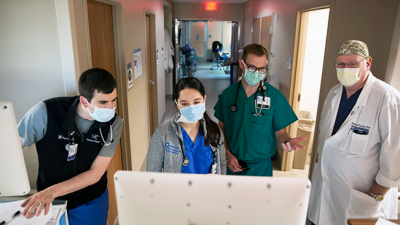
Trained and Protected
Nurse Carrie Mohagheghi trained co-workers on how to correctly wear personal protective equipment.
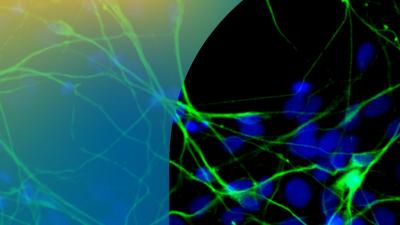
Stepping Up to Help Fight COVID-19
When Melissa F. Neumann, MD, and her husband, James Crichton, made a $150,000 pledge earlier this year to the Laszlo Ormandy Professorship Fund in the Department of Orthopaedic Surgery at Duke University School of Medicine, they did not know how fast their gift would change its purpose.
Artist Judith Snyderman Supports Geriatrics Nursing Research at Duke
When artist Judith Snyderman, RN’64, Honorary Alumna’19, was in high school in Brooklyn, New York, her grandmother had a major stroke. One side of her body was disabled, and she was moved to a nursing home. Snyderman recalls vividly how caregivers transferred her grandmother from the bed to a wheelchair. “I remember her helplessness, and I wished I could help her,” she says.
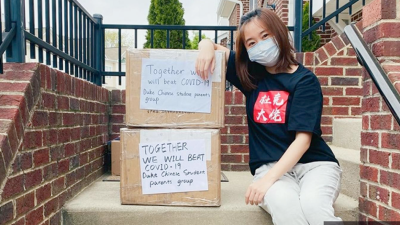
Chinese Alumni and Parents Come Together to Help Duke
Duke connections remain strong and community spirit shines through from the other side of the world. Donations of cash and surgical masks to Duke Health arrive quickly thanks to active network.
Duke Health COVID-19 Response Fund Receives Generous Gift
As teams throughout Duke’s hospitals, clinics, and research labs actively monitor and respond to the developing COVID-19 pandemic, Duke Health’s COVID-19 Response Fund to support the area of greatest need has received a generous gift from the Biogen Foundation.
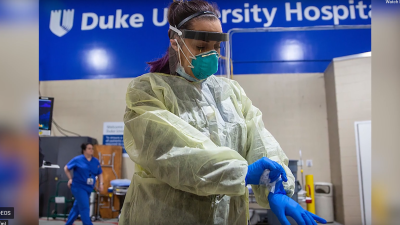
Duke on the Forefront of COVID-19 Research
Researchers and staff at the Duke Human Vaccine Institute and the Duke Regional Biocontainment Laboratory are working around the clock to develop therapies and a vaccine to combat COVID-19.

Duke School of Nursing Innovates to Help Fight COVID-19
The Duke University School of Nursing's Health Innovation Lab is a collaborative space that brings together the professions of nursing, medicine, and engineering, to develop and test products for use in the patient care setting. This has become especially important during the COVID-19 pandemic.

The Community Rallies for Duke Health
As the COVID-19 pandemic continues to challenge hospitals, the Duke Health System is benefitting from the generous support of companies, groups, businesses, and individuals who are providing donations of critically needed Personal Protective Equipment and meals for Duke’s many front-line healthcare providers.