


Why We're MADE FOR THIS
Learn what we're doing to transform health care, prepare the next generation of leaders, and solve the world's greatest medical challenges.
Stories

Duke School of Medicine Match Day 2025
In a packed learning hall, Duke University School of Medicine celebrated Match Day 2025, when the next generation of doctors learned what awaits them after finishing medical school. The event marked the culmination of years of dedication and hard work, as 116 students discovered their residency destinations.
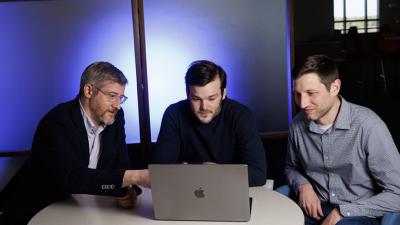
AI Model Predicts Risks and Potential Causes of Adolescent Mental Illness
An artificial intelligence (AI) model developed by Duke Health researchers accurately predicted when adolescents were at high risk for future serious mental health issues before symptoms become severe.
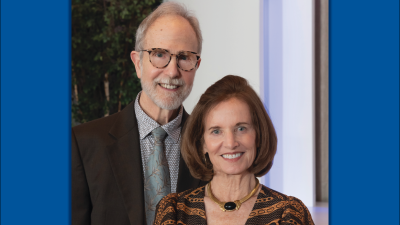
A Heartfelt Friendship: Williams-Wallace Biomedical Research Fund Endowment Honors Mentors
Thanks to the support of R. Sanders “Sandy” Williams, MD'74, HS'77-'80, and family, a newly-established fund will provide support to laboratory-based research projects conducted by physician-scientists in the School of Medicine.
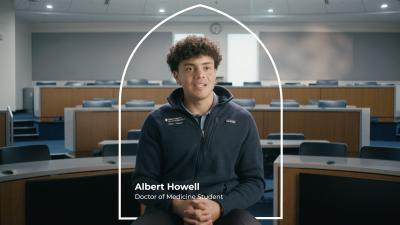
Journey of Medical Student Albert Howell
Albert Howell shares his journey to the MD program at Duke and the importance of scholarship support in making his dream come true.
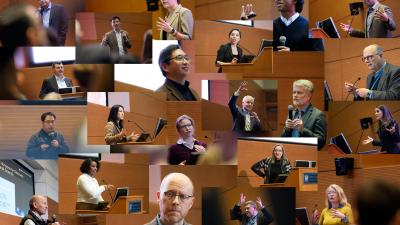
Symposium Highlights Cutting-Edge Research
Duke University School of Medicine’s research symposium showcased how discovery science, AI, technology, and translation are driving progress on some of the biggest challenges in biomedical science.
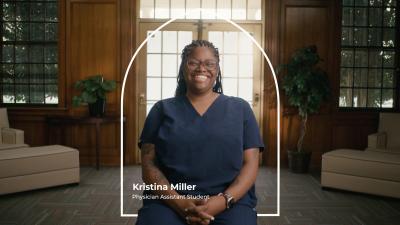
Journey of Duke Physician Assistant Student Kristina Miller
Physician assistant student Kristina Miller reflects on her journey to Duke and how the Hamilton-Carter Scholarship helped her achieve her goals.
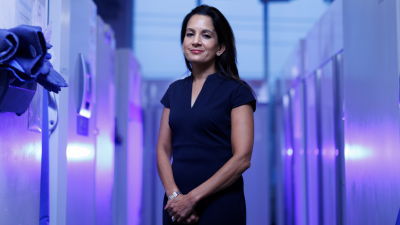
Precision Health
Revolutionary advances in genomics, gene editing, and big data have given us the ability to understand, prevent, detect, diagnose, and treat disease with extraordinary levels of precision.
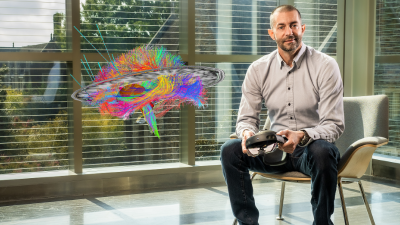
Unlocking the Secrets of the Brain
Scientists at Duke are inventing novel approaches to understand the inner workings of the brain and to create ever more effective ways to repair and restore it.
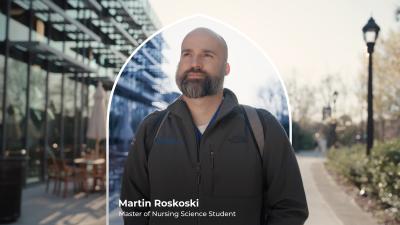
Journey of Nursing Student Martin Roskoski
Martin Roskoski shares his motivation for attending Duke University School of Nursing and how scholarship support makes a difference in his journey.